

Kaal Sarp Dosh: How It Is Checked, Its 12 Named Types and Traditional Remedies
Did one calculator find Kaal Sarp in your chart and another find nothing? Both can be applying the rule correctly: some count a chart with a single planet outside the Rahu-Ketu axis as partial Kaal Sarp, and others, Astroliya included, do not.
Kaal sarp dosh (also written Kaal Sarp yoga or Kala Sarpa) is one of the most talked-about patterns in Vedic astrology, and one of the most loosely explained. The idea is simple: in a birth chart, Rahu and Ketu always sit exactly opposite each other, and when all seven visible planets fall on one side of that line, astrologers say the chart is "hemmed in" by the serpent. That is the core definition. Everything else people attach to it, the fear, the urgent rituals, the fixed fees, is interpretation layered on top.
Astroliya's free kundli applies the strictest form of that rule: exact degrees, all seven planets, no partial version. A chart with even one planet across the line is marked not present. The remedies further down are what families have traditionally followed, offered as tradition and never as something you must buy.
What Kaal Sarp dosh is: seven planets on one side of Rahu and Ketu
Rahu and Ketu are not physical planets. In the Parashari tradition they are the two lunar nodes, the points where the Moon's path crosses the Sun's. Because they are two ends of one axis, they are always 180 degrees apart. Draw a line from Rahu to Ketu across your chart and the zodiac splits into two halves.
The seven planets in question are the Sun, Moon, Mars, Mercury, Jupiter, Venus and Saturn. If every one of them sits in the same half, the chart is said to have Kaal Sarp. "Kaal" is usually translated as time (or death, in its older sense), "sarp" as serpent; Rahu is pictured as the serpent's head and Ketu as its tail.
How Astroliya's dosha check reads it
The Dosha check on your kundli uses the strict, degree-based rule:
- It takes the exact longitude of all seven planets and of Rahu.
- For each planet it measures how far ahead of Rahu it is, going forward through the zodiac.
- If every planet is less than 180 degrees ahead (between Rahu and Ketu), or every planet is more than 180 degrees ahead (between Ketu and Rahu), Kaal Sarp is marked present. If even one planet is on the other side, it is marked not present.
Because the check uses planetary longitudes and not houses, it does not need your lagna. If you don't know your birth time, it uses noon positions. Most planets barely move in a day, but the Moon moves about 13 degrees, so a Moon sitting close to the Rahu-Ketu line can land on either side depending on the actual hour. If your result says present and your Moon is near the axis, treat it as uncertain until you know the time.
The check tells you whether the pattern is there. It does not name the type, and it does not say what the pattern will do in your life, because no rule on its own can. The way it reads in a chart depends on the houses involved, the planets' strength, and the dasha you are running.
Full and partial Kaal Sarp: why two calculators disagree
If one site tells you that you have Kaal Sarp and another tells you that you don't, it is almost always one of these differences, not an error.
| Question | Strict reading (what Astroliya applies) | Looser readings some astrologers use |
|---|---|---|
| Degrees or signs? | Exact degrees: a planet in Rahu's sign but behind Rahu is outside | Whole signs: any planet in Rahu's or Ketu's sign counts as inside |
| One planet outside? | Not Kaal Sarp | Called partial (anshik) Kaal Sarp |
| A planet exactly with Rahu or Ketu? | Measured by degree like any other | Sometimes said to break the yoga, sometimes to strengthen it |
| Which direction? | Either half counts | Some count only Rahu-to-Ketu, and give the Ketu-to-Rahu form a different name |
A worked illustration
This is an invented chart, used only to show how the rule behaves. Say Rahu is at 10 degrees Capricorn, so Ketu is at 10 degrees Cancer. The half "ahead of Rahu" runs from 10 Capricorn through Aquarius, Pisces, Aries, Taurus and Gemini to 10 Cancer.
| Case | Positions | Strict result | Sign-based result |
|---|---|---|---|
| A | All seven planets between 15 Capricorn and 5 Cancer | Present | Present |
| B | As A, but Venus at 6 Capricorn (same sign as Rahu, 4 degrees behind it) | Not present | Present |
| C | As A, but Mars at 20 Leo | Not present | Partial, for those who count it |
Case B is the classic source of disagreement. Neither answer is "wrong"; they follow different rules. When you compare results, ask which rule was used before you worry about the answer.
The 12 Kaal Sarp dosh types by Rahu's house
Tradition gives each form a serpent's name, taken from Rahu's house counted from the lagna (Ketu is always in the house opposite). Because the type depends on the lagna, naming it needs an accurate birth time. Astroliya's check does not assign the type; the table below lets you read it yourself from Rahu's house in the Planets section of your kundli.
| Rahu in house | Ketu in house | Traditional name |
|---|---|---|
| 1st | 7th | Anant |
| 2nd | 8th | Kulik |
| 3rd | 9th | Vasuki |
| 4th | 10th | Shankhpal |
| 5th | 11th | Padma |
| 6th | 12th | Mahapadma |
| 7th | 1st | Takshak |
| 8th | 2nd | Karkotak |
| 9th | 3rd | Shankhachood |
| 10th | 4th | Ghatak |
| 11th | 5th | Vishdhar |
| 12th | 6th | Sheshnag |
Astrologers traditionally read each type through the houses on the axis. Rahu in the 7th (Takshak), for example, puts the nodes across the houses of self and partnership, so the reading tends to centre on relationships; Rahu in the 10th (Ghatak) is read around work and home. That is a starting point for a conversation about your chart, not a prediction. Spellings vary from region to region, and some lists differ slightly in the names used.
What Kaal Sarp does not mean
A lot of the worry around Kaal Sarp comes from claims that the tradition itself does not support.
- It is not a curse or a sentence. Even astrologers who take it seriously read it as a pattern of emphasis on the Rahu-Ketu houses, weighed against everything else in the chart.
- It does not stop marriage, children or success. No reading worth trusting decides any of these from one pattern.
- It does not act all at once or all the time. Astrologers usually say it shows most during Rahu or Ketu periods; see Rahu Mahadasha for how those 18 years are read.
- It is not the same as Pitra dosh. The two are often discussed together, but that is a separate check (its markers are the Sun sharing a sign with Rahu or Ketu, or Rahu in the 9th), explained in our Pitra dosh guide.
- It does not need a fee to "remove" it. No ritual is a requirement, and a strong pattern in a chart is not something anyone can switch off.
If a reading makes you afraid, ask for the reasoning: which planets, which houses, which rule. A reading that cannot show its working is not one to act on.
Kaal Sarp dosh remedies people traditionally follow
These are the practices families have long followed when a chart is read as having Kaal Sarp. They are optional, they are acts of devotion and steadiness, and none of them replaces medical, legal or financial advice when a real problem needs it.
- Mantra. The Maha Mrityunjaya mantra, often on Mondays, is the most common recommendation; some also chant a Rahu mantra. The mantra tool suggests a mantra from your own chart, with its meaning, when to chant it and a mala counter for 108 repetitions.
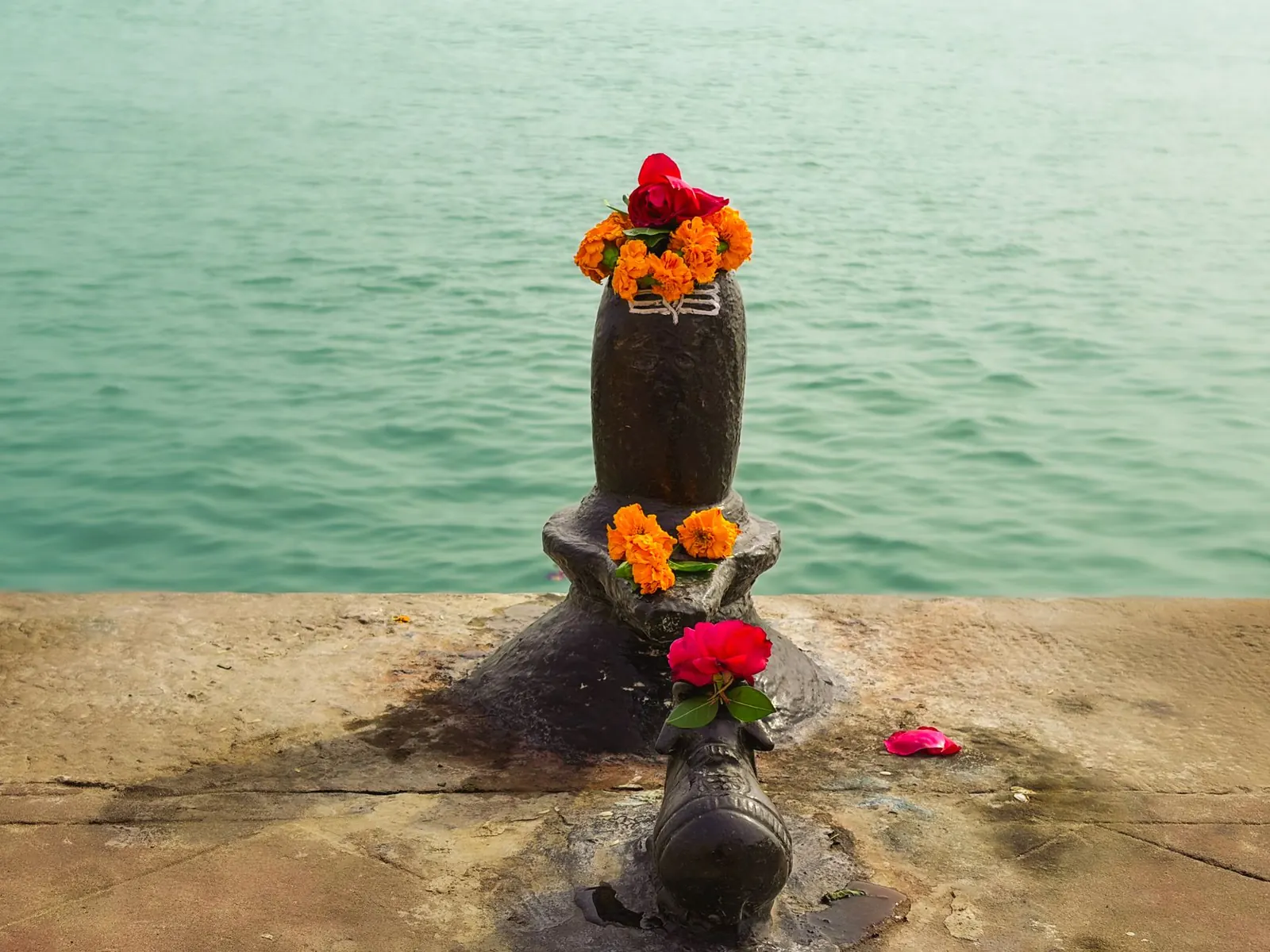
- Offering water to a Shivling. Usually on Mondays, and especially in the month of Shravan. Our Sawan guide covers that month.
- Observing Nag Panchami. Families who follow the serpent tradition keep this day with prayer and offerings.
- Pilgrimage. Trimbakeshwar, near Nashik in Maharashtra, one of the twelve Jyotirlingas, is the temple most associated with Kaal Sarp shanti rites. Other Shiva temples are visited for the same reason. A pilgrimage is a personal choice, not a condition.
- Steady habits on Rahu's themes. Astrologers sometimes suggest honesty in dealings, avoiding shortcuts and intoxicants, and regular charity, since Rahu is read as the planet of craving and confusion. These help whether or not you believe in the dosha.
Rahu in Capricorn, Ketu in Cancer: the 2026 to 2028 sky
Rahu and Ketu move backward through the zodiac, changing sign roughly every eighteen months. From 5 December 2026 to 24 June 2028, Rahu is in Capricorn and Ketu in Cancer. During a node transit there can be stretches when all seven transiting planets fall on one side of the axis, and some astrologers call these "transit Kaal Sarp" periods. They affect the sky everyone shares, not your birth chart, so they do not give you Kaal Sarp dosh. We have not listed those dates here because we have not computed and checked them.
What this axis does mean for your own chart (which houses Capricorn and Cancer are for you, and whether the transit touches your natal Rahu, Ketu or Moon) is covered in Rahu-Ketu transit 2026 to 2028. The eclipses of 2027, which fall near the nodes, are in Eclipses 2027.
Check your own chart
- Make your free kundli with your date, time and place of birth.
- Open the Doshas section and read the Kaal Sarp line: present or not present and, when present, which side of the axis all seven planets sit on.
- If you entered your birth time, find Rahu's house in the Planets section and match it against the table above for the traditional name.
- If the result says present, look at which planet is closest to the Rahu-Ketu line. If it is the Moon and your birth time is uncertain, the result is uncertain too.
- If you want to talk it through, our AI astrologer chat can read the pattern with the rest of your chart, in Hindi or English. It is an AI, and it gives guidance, not certainty.
For the other dosha checks explained the same way, see all dosha articles, or start with Manglik dosha.
Questions people ask
Can I check Kaal Sarp dosh by date of birth alone?
Mostly, yes. The strict check uses planetary degrees, not houses, so Astroliya uses noon positions when the birth time is missing. The exception is a Moon close to the Rahu-Ketu line, which can switch sides within a day. Naming the type (Anant, Kulik and so on) does need the time, because it depends on the lagna.
Is Kaal Sarp yoga in the classical texts?
It is not described in Brihat Parashara Hora Shastra or the other best-known classical works. It became widely used later, and astrologers today differ on how much weight to give it. Reading it as one pattern among many is the balanced view.
Do I have to do a Kaal Sarp puja?
No. Remedies, including pujas and pilgrimages such as Trimbakeshwar, are traditionally recommended and entirely optional. Simple practices like mantra japa and Monday prayers are followed by many families instead, and no ritual can promise an outcome.
Why does one site say I have Kaal Sarp and another say I don't?
Usually because they use different rules: degrees or whole signs, and whether a single planet outside the axis still counts as partial Kaal Sarp. Astroliya uses the strict degree rule with no partial form, and tells you so. Compare the rule before comparing the answer.
Does Kaal Sarp dosh end at a certain age?
Some astrologers say its effects ease after a certain age, but the ages given differ and are not found in the classical texts. Most read its timing through the dasha instead, with Rahu and Ketu periods as the times it is said to show most.
From the Astroliya store
Pieces for this guide
Chosen from our own store to go with what you just read.


