

Vastu Tips for Money: Simple Changes at Home, and What They Can't Do
Where should the cash locker stand? Most vastu writers say against a south or south-west wall, opening towards the north they link with Kubera. The rest of the tradition's money advice is just as cheap, from a lit entrance to a clean kitchen, and none of it does the work of a budget.
Most vastu tips for money you will find are about small things: a tidy entrance, where the cash box sits, a clean kitchen, a calm puja corner. That is good news, because nearly all of them cost little and need no builder. The room advice below comes from the same records Astroliya's free vastu tool shows for the entrance, kitchen and puja room; the locker rule comes from the wider vastu literature, which the tool does not cover.
A word on how to read it. Vastu Shastra is a traditional system of arranging space by direction. Its texts and practitioners link certain zones with prosperity, and many families find that following them makes a home feel more ordered and more cared for. It is not a financial plan, and nothing here should replace one.
Vastu tips for money: the five places tradition looks at first
If you only have ten minutes, these are the places vastu traditionally looks at first when the question is wealth:
- The main door, because tradition treats it as the way opportunity enters. Keep it lit, clear and in good repair.
- The north of the home, the direction traditionally linked with Kubera, the keeper of wealth. This is where the locker question comes in.
- The kitchen, the Agni (fire) corner in the south-east, tied in the tradition to the household's nourishment and stability.
- The puja corner in the north-east, where many homes worship Lakshmi.
- Clutter, leaks and broken things anywhere in the house, which almost every vastu tradition reads as blocked or draining energy.
Each one is explained below, with what to keep and what to avoid.
Start at the main door
Astroliya's room record for the entrance gives its traditionally preferred zone as north, north-east or east. Most people cannot move their door, and you do not need to. What the record asks for is upkeep:
- Keep the entrance well lit and free of clutter.
- Keep the door in good repair, with no creaks or loose handles.
- A clean doormat and a clear nameplate are seen as welcoming.
And what it suggests avoiding:
- Piling shoes right at the door.
- A dustbin beside the main door.
- Anything that stops the door opening fully.
The reasoning in the tradition is simple: a door that opens fully, into a lit and tidy space, welcomes what comes in. If your door faces south, that is not a money problem in itself; our guide to main door vastu explains what the tradition actually says about south-facing entrances.
Where to keep money as per vastu: the locker and the north
The locker is where vastu for wealth gets most specific, so it is worth being precise about what is tradition and what is not.
Many vastu writers say the north belongs to Kubera, the treasurer of the gods in Hindu tradition. From that, a common rule follows: keep the locker, safe or cash box so that its door opens towards the north. In practice that usually means the locker stands against the south or south-west wall of a room, with its front facing north. Some traditions also accept a locker that opens towards the east.
A few related points are repeated widely:
- Keep the locker off the bare floor if you can, on a stand or shelf.
- Keep it clean and orderly inside, with papers filed rather than stuffed.
- Do not keep it under a staircase or beneath an overhead beam.
- Keep the area around it free of broken items and old bills.
Two honest notes. First, this locker rule comes from the wider vastu literature; it is not one of the five room records in Astroliya's own vastu tool, which covers the entrance, kitchen, bedroom, puja room and study. Second, the safest place for most of your money is a bank, not a locker. The tradition was written for homes where wealth was kept at home; if you follow the rule today, it applies to the cash, jewellery and documents you actually keep there.
A worked illustration
Here is an illustration, not a real reading. Suppose a two-bedroom flat has its steel almirah in the main bedroom, against the east wall, opening towards the west. Read by the common rule, a family wanting to follow vastu for the locker might move the almirah to the south wall so its doors open towards the north, clear the top of it of old boxes, and file the papers inside. That is an afternoon's work. If the room's layout does not allow it, the tradition does not demand a rebuild; keeping the existing locker clean and orderly is the part everyone can do.
Kitchen, puja corner and the rest of the house
Vastu for wealth is not only about where money sits. The tradition reads the whole house, and two rooms come up again and again.
The kitchen
The room record places the kitchen in the south-east, the Agni corner. Its keep list: cook facing east if your layout allows, keep the stove and the sink a little apart (fire and water), and keep the kitchen clean and well ventilated. Its avoid list: unwashed dishes left overnight, a stove directly in line with the main door, and broken or chipped utensils. A full room guide is in vastu for kitchen.
The puja corner
The puja room record points to the north-east, the Ishan corner. Face east or north while praying, keep the space clean, simple and well lit, and light a small diya in the morning if you like. Avoid a puja space under a staircase, one that shares a wall with a bathroom, and broken idols or torn pictures. This is where many families keep a Lakshmi image or yantra; see pooja room vastu for the details.
Clutter, leaks and broken things
Read the avoid lists across all five rooms in Astroliya's records and one pattern stands out: broken utensils, broken idols, clutter under the bed, piles of old papers, things blocking a door. Vastu practitioners commonly add dripping taps and leaking pipes to this, reading water running away as money running away. Whatever you make of the symbolism, fixing a leak and clearing what you do not use are the cheapest changes on this page, and the ones with the most practical upside.
A quick comparison: what to change, and what it costs you
| Area | What tradition suggests | Effort | Needs a builder? |
|---|---|---|---|
| Main door | Light, clear, repaired, no shoes or bin at the door | Low | No |
| Locker or cash box | Opens towards the north (or east), clean, off the floor | Low to medium | No |
| Kitchen | Clean, ventilated, no dishes overnight, no broken utensils | Low | No |
| Puja corner | North-east if possible, clean and lit, no broken idols | Low | No |
| Leaks and clutter | Fix taps, clear what you do not use | Low | Sometimes a plumber |
| Moving a room or door | Rarely advised; the tradition offers simpler options | High | Yes |
For every room at a glance, with its zone and directions, our room-by-room vastu plan puts the five records in one place.
Pyrite and the Lakshmi yantra: what they are and where people keep them
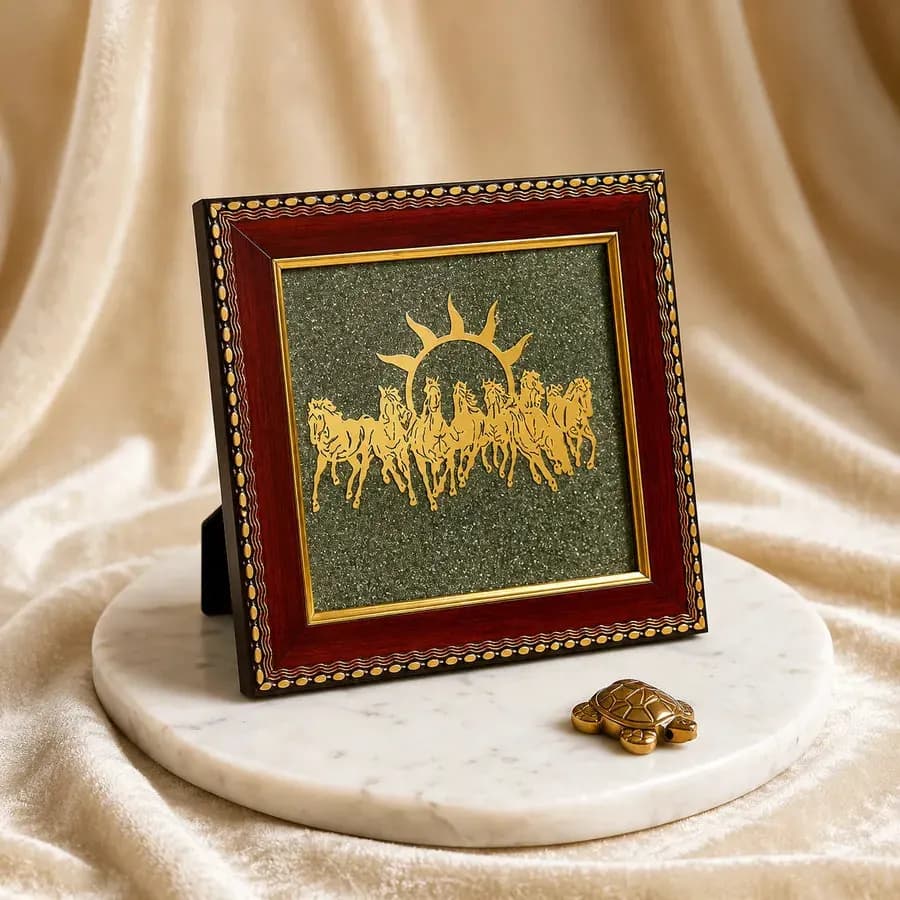
Pyrite is a brassy, metallic mineral that has long been nicknamed "fool's gold". In vastu decor it is popularly treated as a symbol of abundance, and it often appears with traditional motifs. Astroliya's store lists three such pieces. Here they are by their stated specs, so you know what each one physically is.
| Piece | What the listing describes | Stated size and material | Where people commonly keep it |
|---|---|---|---|
| 7 Horses Raw Pyrite Vastu Frame | Seven running horses with raw pyrite; horses linked in tradition with speed and forward movement | 7.5 x 7.5 inch frame | Office, business space, study or living area |
| 7 Trunk Elephant Pyrite Wall Frame | A seven-trunk elephant motif with raw pyrite stones; the elephant linked with strength and stability | 19 x 19 cm, wooden frame with raw pyrite stones | Living room, office, entrance area or puja space |
| Lakshmi Yantra Pyramid with free raw pyrite | A Lakshmi yantra on a pyramid, with a separate raw pyrite stone | Size not stated on the listing | Puja space, desk, shop counter or office |
Placement in the tradition usually follows the zones above: a Lakshmi yantra in the north-east puja corner or in the north, and frames on a north or east wall where they are easy to see and keep dust-free. Our pyrite frames for home guide compares the three in detail, and the Lakshmi Yantra pyramid guide covers the yantra, its placement and how to stop pyrite tarnishing.
Dhanteras and Diwali: when people make these changes
Many families tie their wealth-related vastu work to Dhanteras and Diwali: cleaning the house top to bottom, mending what is broken, lighting the entrance and setting up the puja corner for Lakshmi Puja. Per Drik Panchang's calendar, Dhanteras falls on 6 November 2026 and Diwali (Lakshmi Puja) on 8 November 2026; in 2027, Dhanteras is on 27 October and Diwali on 29 October. These are New Delhi dates, and puja timings vary by city, so check a panchang for where you live. Our Dhanteras guide explains the day and what people traditionally buy.
What vastu cannot do for your money
This is the part we would want a friend to read before spending anything.
- Vastu is not financial advice. No placement of a locker, frame or yantra changes your income, debts or savings. Decisions about loans, investments and insurance belong with a qualified financial adviser.
- Budgeting matters more. A written monthly budget, an emergency fund and paying off costly debt first will do more for most households than any change on this page. Vastu can sit beside those habits; it cannot replace them.
- A "wrong" direction is not a curse. Plenty of homes have a south door or a kitchen outside the south-east. The tradition itself offers small adjustments, and none of them requires fear or demolition.
- Be wary of costly fixes. If anyone tells you that your finances will collapse unless you buy an expensive remedy or break a wall, that is a sales pitch, not vastu.
If you want an astrological view of money that looks at your own birth chart rather than your floor plan, the wealth and money report reads the houses and planetary periods astrologers traditionally link with income and savings. It is an astrological reading, offered as tradition, and not financial advice. Some people also wear a 7 Mukhi rudraksha, traditionally linked with Mahalakshmi; our 7 Mukhi guide explains who wears it and why. And if you would like to talk your home through, you can ask Astroliya's AI astrologer your vastu questions.
Questions people ask
Which direction is best for keeping money as per vastu?
The tradition most often says the north, the direction linked with Kubera. In practice that usually means placing the locker or cash box against a south or south-west wall so that its door opens towards the north. Some practitioners also accept a locker that opens towards the east.
Can vastu make me rich?
No. Vastu is a traditional way of arranging space, and the tradition links some zones with prosperity, but it does not change income or savings. Treat it as a way to keep your home ordered and cared for, and rely on budgeting and sound financial advice for money decisions.
Do I need to buy a pyrite frame or yantra for vastu for wealth?
No. Every tip in the first half of this guide, from the entrance to the locker to fixing leaks, costs little or nothing. Pyrite frames and a Lakshmi yantra are optional decor that some people like as a reminder of their intentions.
My main door faces south. Is that bad for money?
Not in itself. A south-facing door is common, and the tradition offers simple adjustments such as good lighting, a clean threshold and a well-kept door. See the main door guide for what the tradition says, and avoid anyone who insists on expensive or structural changes.
What should I avoid keeping near the locker?
The tradition commonly says to keep the locker away from a staircase and from an overhead beam, and to keep old bills, broken items and clutter away from it. Keeping the inside filed and clean is the part almost every vastu writer agrees on.
From the Astroliya store
Pieces for this guide
Chosen from our own store to go with what you just read.
 45% off7 Horses Raw Pyrite Vastu Frame for Wealth, Success & Career Growth₹549
was ₹999Buy 10% offLakshmi Yantra Pyramid with Free Raw Pyrite Stone for Wealth & Prosperity₹899
was ₹999Buy 53% offASTROLIYA 7 Trunk Elephant Pyrite Wall Frame for Wealth & Prosperity₹699
was ₹1,499Buy Authentic 5 Mukhi Rudraksha Mala - 108 Beads for Meditation₹1,260.60Buy