

Vastu for Kitchen: Best Direction for the Stove, Sink and Cook
In most flats the kitchen sits wherever the builder ran the gas line and the drain, which is seldom the south-east corner vastu asks for. This guide starts from that kitchen: what the tradition wants from the room, which parts a tenant can still follow, and which are not worth a plumber's bill.
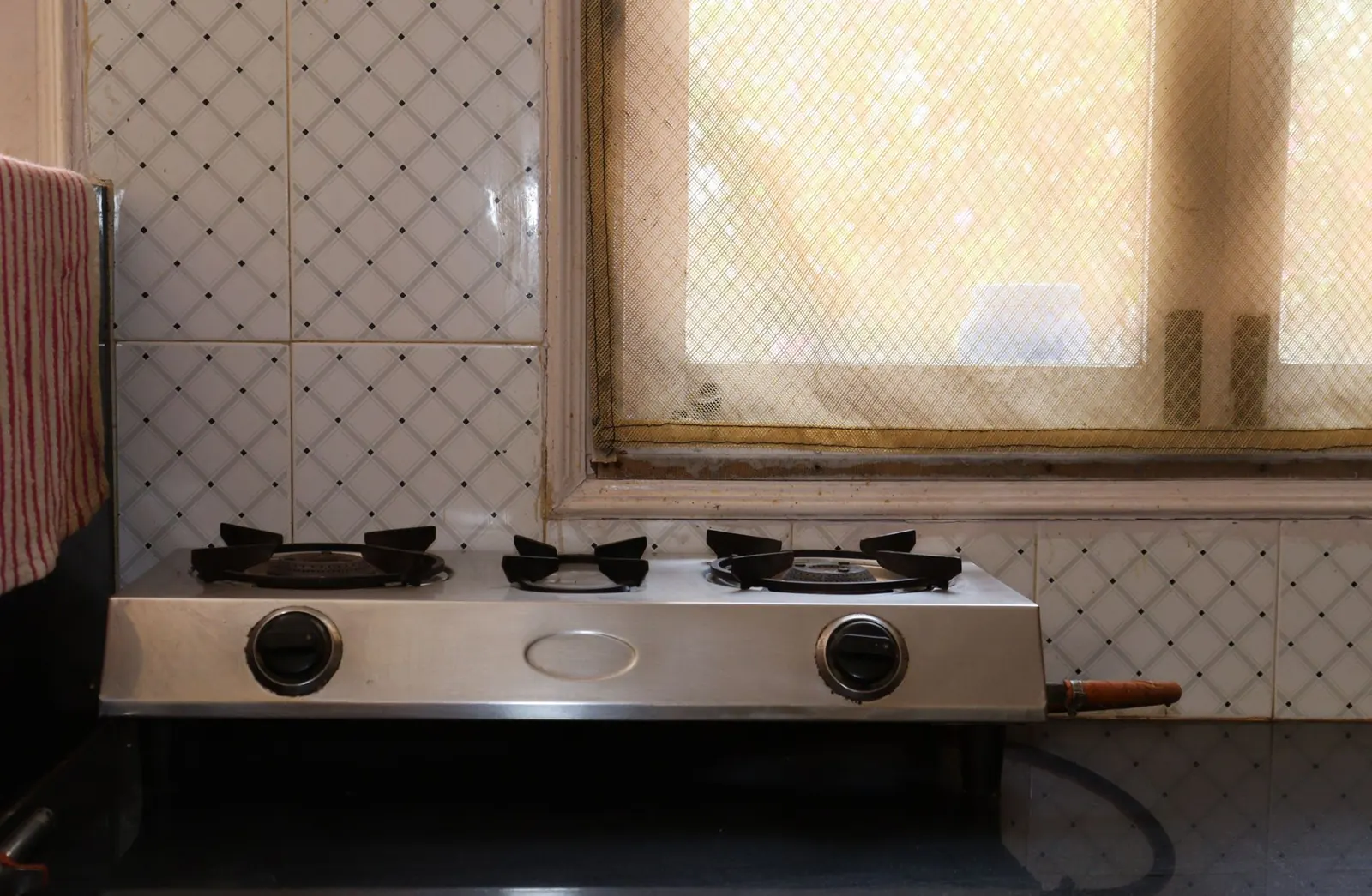
The kitchen is the room vastu is strictest about and the room a flat owner has least say over. Apartment kitchens are planned around the building's shared plumbing shaft, gas line and exhaust outlet, so the room lands wherever those run, and the stove sits where the gas pipe ends. Vastu for kitchen, the traditional Indian guidance on where food is cooked, wants that room in the south-east, the corner of fire. For a great many homes that is simply not on offer.
So this guide reads the tradition from the other end. It sets out what vastu asks of a kitchen and why, then sorts each request into what you can follow with a curtain, a habit or a portable burner, and what would mean moving pipes. Vastu is a tradition, not a building code or a medical system: no kitchen layout can promise health, harmony or money, and nothing here asks you to break a wall.
What Astroliya's vastu for kitchen record says
Astroliya's vastu tool keeps one short record for each of five rooms: the entrance, kitchen, bedroom, puja room and study. The kitchen record is the backbone of this article, so here it is in full.
| What the record says | Detail |
|---|---|
| Traditionally preferred zone | South-east (Agni corner) |
| Keep | Cook facing east if your layout allows. Keep the stove and the sink a little apart (fire and water). Keep the kitchen clean and well ventilated. |
| Avoid | Leaving unwashed dishes overnight. A stove directly in line with the main door. Keeping broken or chipped utensils. |
Notice how modest it is. There is no list of forbidden colours, no demand to move a gas line and no warning of illness. The rest of this guide explains each line and adds the reasoning and options vastu writers commonly give.
Kitchen direction as per vastu: why the south-east
Vastu divides a plot into eight directions plus the centre, and classical texts assign each direction a guardian deity, the dikpala. The south-east belongs to Agni, the god of fire. Since the kitchen is where fire is kept and used every day, the tradition matches the room to the fire corner. In Sanskrit and Hindi this corner is called Agneya (आग्नेय कोण), and the Hindi version of Astroliya's record says it in exactly those words: दक्षिण-पूर्व (आग्नेय कोण).
If you searched vastu ke anusar rasoi ki disha, that is the answer: rasoi (the kitchen) is traditionally placed in the south-east, dakshin-purv.
Vastu writers do not stop at one direction, though. Most of them rank the other zones too. The table below shows how the kitchen is commonly ranked across the home. It is a summary of common teaching, and individual practitioners differ on the middle rows.
| Kitchen zone | How vastu writers commonly treat it |
|---|---|
| South-east | The preferred zone: Agni's corner |
| North-west | Most often named as the second choice (the corner of Vayu, air, which is said to feed fire) |
| East or south | Accepted by some writers when the stove itself sits in the south-east part of the room |
| South-west | Usually discouraged: the zone is kept for the main bedroom and stability |
| North-east | The placement most writers advise against: this corner is kept for prayer and water |
| Centre of the home | Traditionally left open (the Brahmasthan), so a kitchen here is discouraged |
Some people also offer practical readings: a kitchen on the east side catches morning light, and good airflow clears smoke and heat. These are explanations people give for the tradition, not proof of it, and they are useful mainly because they point to what you can actually improve: light, air and cleanliness.
Which way the cook faces
The first line of the record is "cook facing east if your layout allows". East is where the sun rises, and across Hindu practice it is the direction of beginnings, which is why puja, study and cooking are often done facing it.
Writers differ on the other facings. Many name west as the next option, opinions on north are divided, and south is the facing most often advised against. Do not let this become a source of worry. The record's own words, "if your layout allows", are the right spirit: if the counter runs the other way, cooking still feeds your family just as well.
If you want to try east anyway, the cheapest change is often the cooking side rather than the stove. An induction plate or a single portable burner set on an east-facing stretch of counter lets you cook facing east on the days you choose, without touching the gas connection.
Stove direction as per vastu, and where the sink goes
Inside the kitchen, the same compass applies on a smaller scale. Vastu writers commonly suggest these positions.
| Item | Common vastu position inside the kitchen | The reason the tradition gives |
|---|---|---|
| Stove or hob | South-east part of the kitchen, so the cook faces east | Fire in the fire corner |
| Sink and water filter | North-east or north part of the kitchen | Water belongs to the north-east |
| Storage of grains and heavy items | South or west walls | Heavy things in the heavier zones |
| Window or exhaust | East or north-west, or wherever air moves best | Light and ventilation |
The one rule Astroliya's record keeps from this table is the separation of fire and water: keep the stove and the sink a little apart. Vastu writing treats fire and water as opposing elements, and a burner right beside the tap is the layout vastu books most often warn about. In practice "a little apart" can mean a stretch of counter, a chopping area or a small upstand between them. It is also sound kitchen sense: water splashing near a flame and wet hands near a knob are best avoided anyway.
Keep and avoid: the habits behind the record
Most of the record is about habits rather than walls, which is also why it is the part worth acting on first.
- Clean and ventilated. A kitchen that is wiped down and aired after cooking is the most widely shared vastu advice there is, and the easiest to follow.
- No unwashed dishes overnight. Traditional households close the kitchen for the night with clean vessels. The practical side is plain too: fewer pests and a calmer morning.
- No broken or chipped utensils. Cracked crockery is traditionally seen as something to let go of. Chipped cups can also cut lips and hold dirt in the cracks.
- No stove directly in line with the main door. The tradition prefers the kitchen fire not to be the first thing seen from the entrance. If yours is, a curtain, a half screen or keeping the kitchen door closed is the usual answer. Our main door vastu guide covers the entrance side of the same line.
Kitchen not in the south-east? Fixes without rebuilding
If the shaft put your kitchen somewhere else, this decision path stays on the non-structural side throughout.
- Find the directions. Stand at the centre of the home with a phone compass and mark which part of the plan the kitchen occupies. Phone compasses wander near steel and appliances, so take two or three readings.
- Look up the zone. Use the ranking table above. If the kitchen is in the south-east or north-west, you are already within the common teaching.
- Work inside the room. Even in another zone, the stove can sit in the south-east part of the kitchen itself, and the sink towards the north-east part. Many writers treat this as a sufficient adjustment.
- Separate fire and water. This costs nothing and is the record's own rule.
- Adjust the cook, not the house. Face east on an induction plate when you can.
- Do the habits. Clean, ventilate, wash up at night, and clear out broken vessels.
- Stop there. Moving a gas line, drain or kitchen wall is a costly decision. Vastu alone is a weak reason to make it, and any such work belongs with a qualified plumber or engineer.
An example: auditing a north-east kitchen line by line
This is an illustration, not a real reading. Take a rented 1BHK whose kitchen is in the north-east of the flat, the placement most writers advise against. One straight counter runs along the east wall, with the sink at its north end and the hob right beside it at the south end. A single small window sits above the sink, and from the front door you can see the hob. Instead of starting from the zone, which cannot change, go through the record one line at a time.
| Record line | This kitchen | What changes |
|---|---|---|
| South-east zone | North-east of the flat | Nothing structural. The hob already sits at the south end of an east counter, which is the south-east part of the room, and the sink is towards the north. |
| Cook facing east | Yes, the counter is on the east wall | Nothing |
| Stove and sink a little apart | Touching | Clear a stretch of counter between them for chopping, or fit a small upstand if the counter is too short for a gap |
| Clean and well ventilated | One small window | Run the exhaust while cooking and wipe the counter down afterwards |
| No unwashed dishes overnight | Often left in the sink | Wash up before bed |
| Stove not in line with the main door | Visible from the entrance | A curtain or half screen at the kitchen doorway |
| No broken or chipped utensils | Two chipped mugs | Replace them |
Read down the last column: one curtain, two mugs and a few habits. The kitchen stays in the north-east, and every line of the record a tenant controls is now met. The gas line, the drain and the walls were never on the list.
What a kitchen in the "wrong" zone does not mean
It does not mean illness, quarrels or money trouble are coming. Classical vastu describes preferences, and many families in north-east or south-west kitchens live perfectly well. If someone insists a kitchen placement is bound to bring harm, or offers an expensive remedy to undo it, that is a sales pitch, not the tradition. Health questions belong with a doctor and money questions with a financial adviser.
How the kitchen fits the rest of the home
The kitchen is one room in a whole plan. Vastu tends to read the home as a pattern: water and prayer in the north-east, the main bedroom in the south-west, fire in the south-east, and an open centre. Our room-by-room plan puts the five rooms side by side so you can see where the kitchen fits against the others.
Many families also link the kitchen to prosperity, because it is where Annapurna, the goddess of food, is traditionally honoured. If that is the side of vastu you are curious about, vastu tips for money covers the habits people follow, and is honest about what they cannot do.
If you have a specific layout you want to talk through, Astroliya's AI astrologer can go over your kitchen's direction and the keep and avoid list with you in chat. It gives general traditional guidance, not structural or engineering advice.
Questions people ask
Can the kitchen be in the north-east?
Most vastu writers advise against it, because the north-east is traditionally kept for prayer and water. That said, many homes have one, and the usual advice is non-structural: place the stove in the south-east part of that kitchen, keep the room very clean, and avoid treating the placement as a cause for fear.
Which way should the stove face as per vastu?
The tradition prefers a stove placed so that the person cooking faces east. If your stove is fixed facing another way, an induction plate on an east-facing counter lets you follow the habit when you wish, without moving the gas connection.
What if the stove is directly opposite the main door?
Astroliya's kitchen record lists this as something to avoid. The common fixes are a curtain or screen between the door and the kitchen, or keeping the kitchen door closed, so the stove is not the first thing seen from the entrance.
Can the sink and the stove be on the same counter?
Yes. The tradition only asks that fire and water be kept a little apart, not on separate walls. A clear stretch of counter between the hob and the sink is enough, and it is safer for cooking too.
Is the north-west kitchen good as per vastu?
North-west is the zone most commonly named as the second choice after the south-east. Keep the stove in the south-east part of that kitchen and cook facing east if you can.
From the Astroliya store
Pieces for this guide
Chosen from our own store to go with what you just read.
 45% off7 Horses Raw Pyrite Vastu Frame for Wealth, Success & Career Growth₹549
was ₹999Buy 10% offLakshmi Yantra Pyramid with Free Raw Pyrite Stone for Wealth & Prosperity₹899
was ₹999Buy 53% offASTROLIYA 7 Trunk Elephant Pyrite Wall Frame for Wealth & Prosperity₹699
was ₹1,499Buy Authentic 5 Mukhi Rudraksha Mala - 108 Beads for Meditation₹1,260.60Buy