Rudraksha by Zodiac Sign: Which Mukhi Suits Your Moon Sign (Rashi)
The rashi a bead table means is the sign the Moon occupied at your birth, which for many people is not the sign in a newspaper horoscope. Get that right first; the lists themselves disagree most on Cancer and Leo.
Rudraksha by zodiac sign: the quick answer
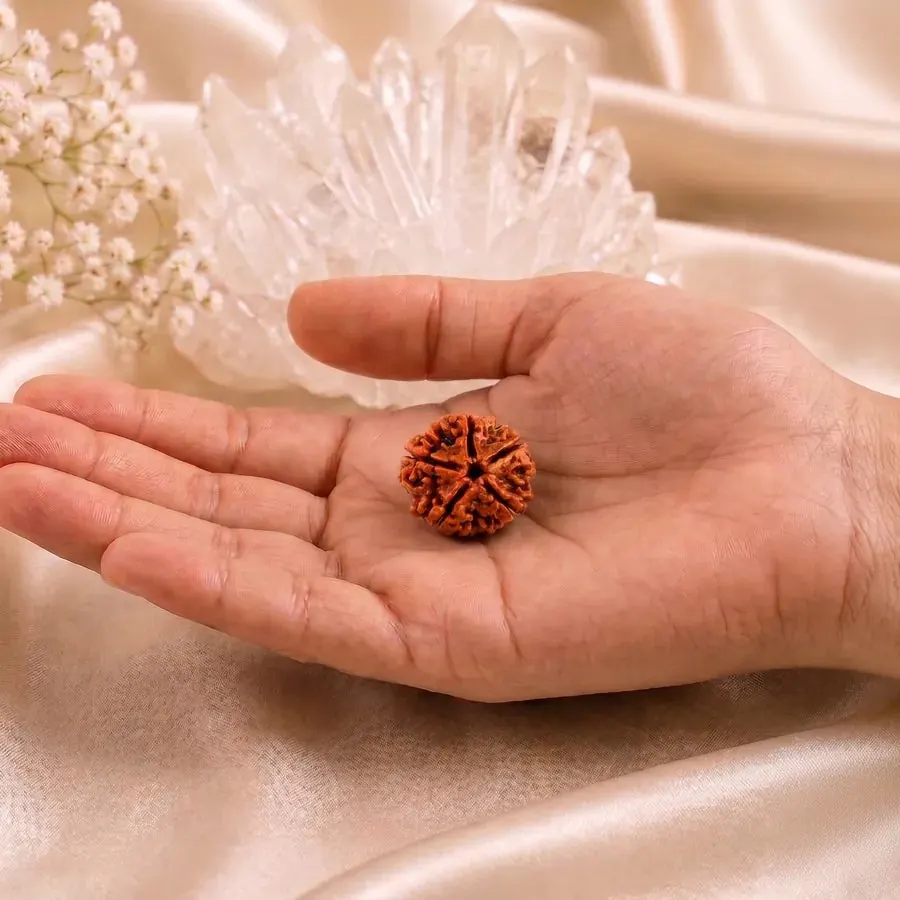
Choosing a rudraksha by zodiac sign works through one simple chain. In Vedic astrology each of the twelve rashis (signs) is ruled by a planet, and astrologers who pair rudraksha with planets give each planet a mukhi, the number of natural face lines on the bead. So your sign points to its lord, and the lord points to a bead. In Vedic practice a sign table like this is read from your Moon sign, the rashi the Moon occupied when you were born, not the Western "star sign" in magazines.
The table below is the mapping most commonly given. It is one widely used scheme, not a settled rule: lists differ, especially for Cancer and Leo, and older texts tie each mukhi more firmly to a deity than to a planet. The last column says plainly whether Astroliya's store carries that bead.
| Rashi (Moon sign) | Western name | Ruling planet | Mukhi commonly given | At Astroliya |
|---|---|---|---|---|
| Mesha | Aries | Mars (Mangal) | 3 Mukhi | Stocked: 3 Mukhi bead |
| Vrishabha | Taurus | Venus (Shukra) | 6 Mukhi | Stocked: 6 Mukhi bead |
| Mithuna | Gemini | Mercury (Budh) | 4 Mukhi | Stocked: 4 Mukhi bead |
| Karka | Cancer | Moon (Chandra) | 2 Mukhi | Not stocked |
| Simha | Leo | Sun (Surya) | 1 Mukhi (some lists: 12 Mukhi) | Stocked: 1 Mukhi pendant; 12 Mukhi not stocked |
| Kanya | Virgo | Mercury (Budh) | 4 Mukhi | Stocked: same 4 Mukhi bead |
| Tula | Libra | Venus (Shukra) | 6 Mukhi | Stocked: same 6 Mukhi bead |
| Vrishchika | Scorpio | Mars (Mangal) | 3 Mukhi | Stocked: same 3 Mukhi bead |
| Dhanu | Sagittarius | Jupiter (Guru) | 5 Mukhi | Stocked: 5 Mukhi bead |
| Makara | Capricorn | Saturn (Shani) | 7 Mukhi | Stocked: 7 Mukhi pendant |
| Kumbha | Aquarius | Saturn (Shani) | 7 Mukhi | Stocked: same 7 Mukhi pendant |
| Meena | Pisces | Jupiter (Guru) | 5 Mukhi | Stocked: same 5 Mukhi bead |
Two things this table does not mean. It does not mean the other beads are wrong for you: the 5 Mukhi, for one, is the bead most lists call suitable for nearly anyone. And it does not mean wearing your sign's bead will change events in your life. Rudraksha is a devotional practice; read everything here as what the tradition says, never as a medical, financial or legal remedy.
Moon sign vs sun sign: why your rashi may surprise you
Most people who search for rudraksha according to rashi already know a sign, and very often it is the wrong one for this purpose. Two separate differences are at work.
Different body. A Western star sign is where the Sun was at your birth. A Vedic rashi, the one used for rudraksha, for the daily horoscope and for kundli matching, is where the Moon was. The Sun spends about a month in each sign; the Moon passes through a sign in roughly two and a quarter days. So two people born a week apart often share a sun sign, yet their Moon signs will differ, because the Moon covers three or more signs in a week.
Different zodiac. Western astrology uses the tropical zodiac, tied to the seasons. Vedic astrology uses the sidereal zodiac, tied to the stars, and the two now sit roughly 24 degrees apart. That is why the Sun's Vedic entry into Mesha, celebrated as Mesha Sankranti in mid-April, comes more than three weeks after Western Aries begins around 21 March.
A worked example (fictional, for illustration)
Take Ananya, an invented person born on 2 April.
- Her Western sun sign is Aries, because 2 April falls after about 21 March.
- Her Vedic sun sign is Meena (Pisces), because the sidereal Sun does not enter Mesha until mid-April.
- Her Vedic Moon sign, in this illustration, is Karka (Cancer). We have chosen that position for the example; a real Moon sign depends on the exact date, time and place of birth.
A sun-sign list would hand Ananya a 3 Mukhi for Aries and Mars. A rashi-based list would point to the Moon and the 2 Mukhi instead, a bead we do not stock. Three different signs for one person is common, and it is the main reason sign-wise bead lists contradict each other: some are quietly keyed to the Western sun sign.
Find your Moon sign in a minute
Make your free chart on the kundli page with your date, time and place of birth. It shows your Moon sign, your lagna (ascendant) and where every planet sits, all calculated in the sidereal zodiac.
- Birth time matters most near a sign change. Because the Moon changes sign every couple of days, a birth a few hours either side of that moment can mean a different rashi. If your time is approximate, note that your Moon sign may be uncertain.
- Your naam rashi is not the same thing. The sign some families take from the first syllable of a name is a naming custom. For a bead chosen by Moon sign, use the Moon's actual position; our guide to rashi by name explains the difference.
- Once you know your rashi, the horoscope page reads the sky for it day by day, and the table above gives the commonly linked bead.
Sign-by-sign notes: what each pairing rests on
These are short on purpose. Each note says what the commonly given bead is associated with, and where the pairing is weak or disputed.
Mesha and Vrishchika (Mars): 3 Mukhi
The three-faced bead is traditionally linked with Agni, the sacred fire, and with transformation and renewed energy. Mars is the planet of drive and courage, so the pairing reads naturally. It is usually suggested on a Tuesday, Mars's day, though many people simply start on a Monday, Shiva's day.
Vrishabha and Tula (Venus): 6 Mukhi
The six-faced bead is linked with Kartikeya, Shiva's son, and with discipline and focused effort. Venus rules comfort, art and relationships, so the 6 Mukhi is often described as bringing steadiness to a pleasure-loving sign. Friday is Venus's traditional day.
Mithuna and Kanya (Mercury): 4 Mukhi
The four-faced bead is linked with Brahma and the four Vedas, and so with learning and speech. Mercury rules intellect and communication, which makes this one of the more consistent pairings across lists. Our 4 Mukhi guide covers the day and mantra in detail.
Karka (Moon): 2 Mukhi
The two-faced bead is commonly linked with Ardhanarishvara, Shiva and Parvati as one form, and with harmony in close relationships. We do not stock a 2 Mukhi bead, and we would rather say so than offer something else as its equal. The Gauri Shankar, a naturally joined pair also associated with Shiva and Parvati, is a different bead with its own tradition, not a substitute. If you are a Karka native, the 5 Mukhi is the usual all-purpose choice, or have your chart read first.
Simha (Sun): 1 Mukhi or 12 Mukhi
This is where lists disagree most. Some give the 1 Mukhi, linked with Shiva and with focused awareness; others give the 12 Mukhi, which is commonly linked with Surya himself. A genuine 1 Mukhi is also rare, so buy carefully: our 1 Mukhi guide explains what to check. Sunday is the Sun's day.
Dhanu and Meena (Jupiter): 5 Mukhi
The five-faced bead is linked with Kalagni Rudra, a form of Shiva, and in planet lists with Jupiter, the planet of learning and counsel. It is the most common bead of all and the one most lists consider safe for anyone, which makes these two signs the easiest to serve. See the 5 Mukhi guide for bead, mala or bracelet. Thursday is Jupiter's day.
Makara and Kumbha (Saturn): 7 Mukhi
The seven-faced bead is traditionally associated with Mahalakshmi and with stability and a steadier relationship with money. Saturn rules patience, effort and time, and the 7 Mukhi is often suggested during Saturn's harder transits such as Sade Sati. Saturday is Saturn's day, and the 7 Mukhi guide covers the mantra.
When the sign isn't enough: lagna, dasha and a weak planet
A sign table answers one question: which planet rules your Moon sign. A chart reading asks several more, and astrologers traditionally give them more weight.
- Lagna (ascendant). Many astrologers start from the rising sign, not the Moon sign, and look at the lagna lord. Your lagna and rashi often differ, and they can point to different beads.
- What the planet rules for you. The same planet can be helpful or difficult depending on which houses it rules from your lagna. A bead for your rashi lord makes most sense when that lord is a functional benefic for your lagna, that is, when it rules helpful houses in your chart.
- The running dasha. The planetary period you are in now often decides the suggestion. During a Rahu or Ketu period, for example, astrologers commonly look at the 8 Mukhi (Rahu) or the 9 Mukhi (Ketu), beads no sign table lists. Our 8 Mukhi bead is listed as associated with Lord Ganesha and lab certified; the 9 Mukhi pendant is listed as linked with Goddess Durga and described as certified. The 9 Mukhi guide and the Rahu mahadasha explainer go further.
- A weak or afflicted planet. A lord that is debilitated, combust or hemmed in by malefics is read differently from a strong one.
None of this needs guesswork. Your free kundli shows the lagna, the planets and the current dasha, and Astroliya's AI astrologer can read them with you and explain why one bead might be suggested over another. It is an AI reading your calculated chart, not a person, and anything it suggests is optional. For a step-by-step version of this decision, see which rudraksha should I wear.
Wearing more than one bead: simple rules
Combining beads is common and traditionally accepted. A few plain rules keep it sensible.
- Start with one. Wear a single bead for some weeks before adding another, so the practice stays simple and you can see whether it suits your routine.
- Sign bead plus 5 Mukhi is the usual pair. The 5 Mukhi is so widely worn that it sits comfortably beside a sign-linked bead.
- Let the chart choose the second bead, not the collection. Add a bead for a reason, such as your lagna lord or running dasha, not because a list gave you three signs.
- Buy fewer, check more. One genuine bead is worth more than several doubtful ones. Our guide to Nepali vs Indonesian rudraksha explains what actually differs between origins.
- Keep the practice simple. A short mantra on wearing and a clean thread are traditional; if you use a mala for japa, the mantra japa rules cover counting.
If you are drawn to stones as well, the zodiac bracelet by rashi guide pairs crystals with the same twelve signs.
Questions people ask
Should I choose rudraksha by sun sign or Moon sign?
In Vedic astrology, by Moon sign. The rashi used for horoscopes, matching and remedies is the sign the Moon occupied at your birth, in the sidereal zodiac. A list keyed to your Western sun sign can point to a different planet and a different bead altogether.
Which rudraksha is for Cancer (Karka) rashi?
The bead commonly given for the Moon, Karka's lord, is the 2 Mukhi. Astroliya does not stock it, and we do not offer another bead as its equivalent. The 5 Mukhi is the usual general choice, and a chart reading can tell you whether a different bead fits your lagna or dasha better.
Can I wear a rudraksha that is not for my rashi?
Yes. Most traditional lists treat rudraksha as broadly safe to wear, and many people wear a bead chosen for a goal or a dasha rather than their sign. The sign mapping is one way to choose, not a restriction.
Why do different websites give different mukhis for the same sign?
Three reasons: some lists are keyed to Western sun signs, some astrologers use different planet-to-mukhi schemes (Leo's 1 or 12 Mukhi is the clearest case), and older texts link mukhis to deities rather than planets. A reading of your own chart settles more than any single table.
Is rudraksha for moon sign enough, or do I need a full chart?
A Moon-sign bead is a reasonable, low-stakes start. Astrologers traditionally weigh the lagna, the strength of the planet and the running dasha more heavily, and your free kundli shows all three.
From the Astroliya store
Pieces for this guide
Chosen from our own store to go with what you just read.


